Washed, Worn, and Wonderful: The Fans Guarding Charlton Women's Fabric History
Washed, Worn, and Wonderful: The Fans Guarding Charlton Women's Fabric History
There's a shirt hanging on the wall of Karen Osei's front room in Lewisham that her daughter calls "the old red one." Karen calls it something else entirely. "That's twenty years of my life," she says, laughing. "That's cold Tuesday nights and muddy pitches and screaming myself hoarse. You can't just shove that in a drawer."
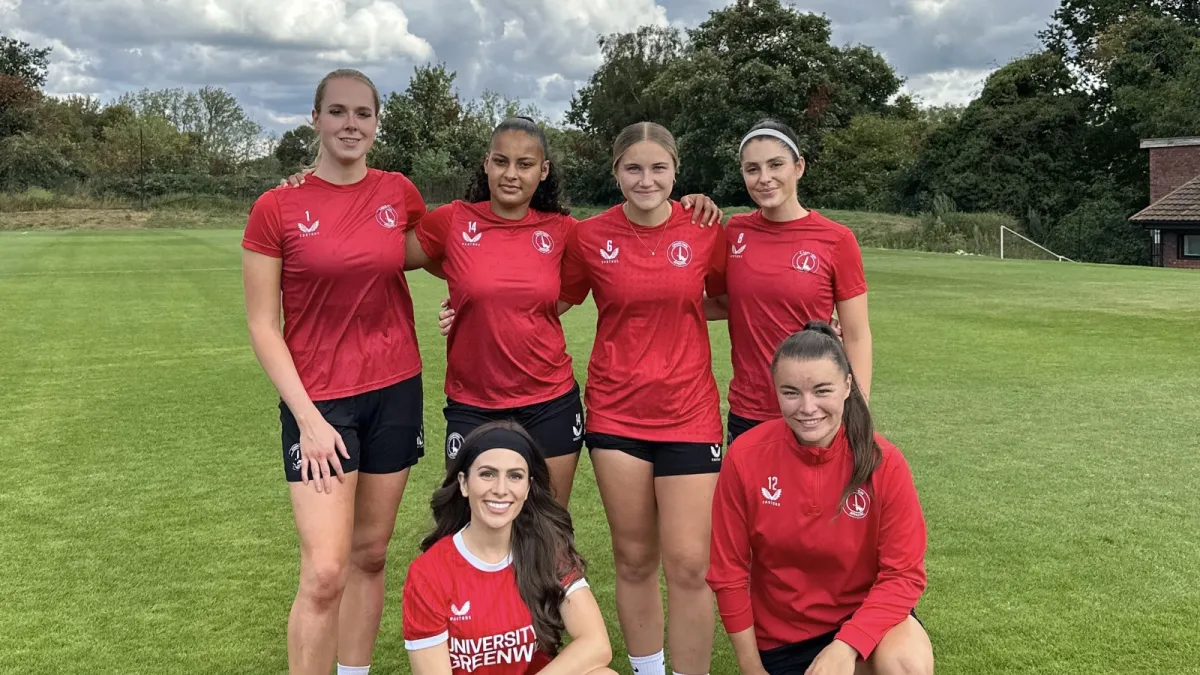 Photo: Charlton Women, via cdn.charltonafc.com
Karen is one of a quietly growing number of Charlton Women supporters who collect, preserve, and celebrate the physical artefacts of the club's history — shirts, scarves, programmes, pennants, and badges that chart the team's journey from its earliest days through to the professional setup it's become. It's a hobby that sits somewhere between fandom and archiving, driven by genuine love and a nagging sense that somebody ought to be doing it.
The Stuff Dreams Are Made Of
Ask any serious collector what got them started and you'll hear a version of the same story. Something was about to be thrown away. A kit was being cleared out of a changing room. A scarf turned up in a charity shop. A retiring player offered her old shirts to whoever wanted them.
"That's how most of us started," says Paul Whitmore, who runs a small but meticulously catalogued collection from his flat in Greenwich. "Nobody sat down and decided to be a collector. You just find yourself with three shirts and then six and then you start thinking, right, I should probably keep track of this properly."
Paul's collection spans multiple eras of Charlton Women's visual identity. He can walk you through the evolution of the badge placement, point out where a manufacturer changed the cut of a collar, and explain exactly why a particular away shirt from the mid-2000s is harder to find than you'd expect. He talks about it the way a historian talks about primary sources — with genuine reverence for what the objects represent.
And that's really the point. These aren't just fashion items or nostalgia pieces. They're evidence. Proof that the team existed, competed, and mattered long before women's football became a fixture on the back pages.
More Than Red and White
The visual identity of Charlton Women has shifted over the years in ways that casual observers might not notice but collectors absolutely do. Fabric weights have changed. Sponsor logos have come and gone. Shorts have got shorter and then longer again. Training kits that were once purely functional have become increasingly designed, reflecting the growing commercial investment in the women's game.
For collector and former player Simone Adeyemi, those changes tell a story about respect. "When I was playing in the nineties, the kit was honestly just whatever was going," she says. "You were grateful to have something that matched. Now the girls get proper kit, proper everything. When I hold an old shirt next to a current one, I can feel that difference. It's not just fabric — it's how seriously people took us."
Simone played for Charlton Women across several seasons and has held onto every shirt she was ever given. Some are framed. Some she still wears around the house, much to her family's amusement. One, a slightly faded home shirt from a cup run she'd rather not specify, she describes as "genuinely irreplaceable."
The Hunt Itself
Part of what binds this community together is the shared experience of the search. Collectors swap leads on social media, tip each other off about car boot sales, and occasionally get into friendly bidding wars on eBay. There's a WhatsApp group — of course there's a WhatsApp group — where photographs of potential finds circulate at all hours.
"Someone posted at half eleven on a Wednesday night last month," Paul says. "A scarf had turned up at a market in Catford. Three of us were replying within minutes. That's dedication, that is."
The rarest items tend to be from the earliest years of the club, when documentation was sparse and nobody imagined that any of it would one day be considered historically significant. Programmes from friendlies, pennants from tournaments that no longer exist, handwritten teamsheets — these are the holy grails. When they surface, they tend to move quickly.
Stitched Into Something Bigger
What makes this community genuinely lovely is the generosity that runs through it. These aren't people hoarding treasures for personal gain. They share photographs freely, loan items for exhibitions, and frequently donate duplicates to the club itself or to local football history projects.
"I'd love it if there was a proper Charlton Women archive somewhere," Karen says. "Not just a box in a cupboard somewhere at the ground, but a real, accessible record. Because this stuff matters. The girls who played twenty years ago deserve to be remembered properly."
That sentiment — that the players of the past deserve better than obscurity — is what really drives the collectors. Every washed-out badge, every slightly bobbled scarf, every shirt with a number ironed on the back rather than properly printed, is a small act of memory. A refusal to let the story disappear.
The women who wore these shirts ran hard, competed fiercely, and did it without the audiences or the budgets that today's players enjoy. The least anyone can do is keep the evidence.
"It's not about the money," Simone says, looking at the shirts on her wall. "It's about saying: we were here. We played. We mattered."
She's right. And thanks to the collectors, that message isn't going anywhere.