Tape, Time, and Tenacity: The Recovery Science Keeping Charlton Women on the Pitch
There's a moment every injured footballer knows. It's not the initial snap or the crumple to the turf. It's the morning after — when you wake up, swing your legs out of bed, and the swelling reminds you that your season might be over before you've had your breakfast.
At Charlton Women, that moment is also when the real work begins.
The medical and sports science team working behind the scenes at the club don't get their names on the back of shirts. They don't celebrate goals. But ask any player who's come back from a serious injury and they'll tell you the same thing: the people in the treatment room are every bit as important as the ones on the training pitch.
What Happens in the First 72 Hours
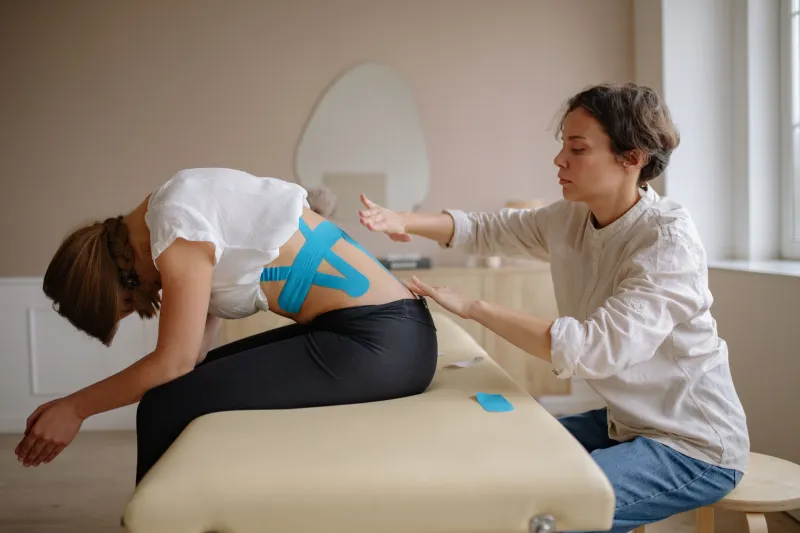
The immediate aftermath of an injury is, according to the club's lead physiotherapist, the most misunderstood phase of the entire recovery process. "Everyone wants to know when a player will be back," she explains, sitting in the small but immaculately organised treatment room at the training ground. "But the first question we ask is: what exactly has happened, and how do we protect the tissue from further damage?"
Modern sports medicine has shifted significantly away from the old RICE (Rest, Ice, Compression, Elevation) model. The team at Charlton Women now work with a PEACE & LOVE framework — Protection, Elevation, Avoid anti-inflammatories, Compression, and Education in the early phase, followed by Load, Optimism, Vascularisation, and Exercise as recovery progresses. It sounds like alphabet soup, but the thinking is rooted in a growing body of evidence that suggests the inflammatory response after injury is actually part of the healing process, not the enemy.
"We used to throw ibuprofen at everything," she says with a wry smile. "Now we're a lot more selective. Inflammation is the body doing its job. You don't always want to shut that down."
The Mental Battle Nobody Talks About
Speak to any Charlton Women player who's sat out a significant chunk of a season, and the conversation quickly moves away from the physical. One midfielder, who spent four months on the sidelines with a knee ligament injury last year, is candid about how dark things got.
"The first two weeks, you're almost fine because you're still buzzing from the matches," she says. "Then it hits you. Your teammates are training, there are games on weekends, and you're doing leg raises in the gym on your own. That's when it gets in your head."
The club has increasingly invested in psychological support as part of the rehabilitation pathway. A sports psychologist now works alongside the physio team, meeting regularly with injured players to address anxiety, identity issues, and the very real fear of re-injury that can linger long after a player has been medically cleared.
"We call it the confidence gap," the physio explains. "A player might be physically ready at week ten, but psychologically they're at week six. If you push them through that gap too fast, you often end up back at square one."
Technology on the Training Ground
Walk through the rehabilitation area at Charlton Women's training base and you'll see a blend of old-school graft and modern kit. Resistance bands hang alongside GPS tracking vests. A force plate — a pressure-sensitive platform that measures how a player loads each leg — sits in the corner, used to identify imbalances before they become problems.
GPS data from training sessions is compared against each player's pre-injury baseline, helping the sports scientists track when someone is genuinely back to full output rather than just going through the motions. "Players are incredibly good at masking," the sports scientist on the team admits. "They want to be back. They'll tell you they feel great. The data doesn't lie in the same way."
Heart rate variability monitoring has also become part of the daily routine, giving the medical team an early warning system for fatigue and recovery quality — factors that significantly increase injury risk if ignored.
The Risk of Coming Back Too Soon
In women's football, where squad depth is often thinner than in the men's game and resources are more stretched, the temptation to rush a return is real. A key player missing for six weeks can alter the course of a season. Everyone — the manager, the player, the supporters — wants her back.
But the Charlton Women medical team are firm on this point. The decision about when a player is ready belongs to the clinical staff, not the dugout.
"We have a return-to-play protocol that every player goes through, regardless of who they are or how important the next fixture is," the physio says. "There are criteria that have to be met. It's not a conversation, it's a checklist."
That approach has, on occasion, caused friction. But the long-term results speak for themselves. Players who have come through the full rehabilitation pathway at the club have shown significantly lower re-injury rates than those who returned early in previous seasons.
"One of our players was cleared medically at week eight after an ankle injury," she recalls. "But her single-leg hop test was at 87% of her uninjured side. Our threshold is 90%. She did another week of loading work, hit 94%, and came back. She hasn't had a recurrence. That extra week mattered."
What It Feels Like to Come Back
For the midfielder who spent four months out, the return to the pitch was everything she'd imagined — and nothing like she expected.
"I thought I'd feel relief," she says. "And I did. But I also felt terrified. Every tackle, every time someone came close, I flinched. The physio had warned me that would happen. Knowing it was normal helped more than I can explain."
She's now one of the most vocal advocates in the squad for taking rehabilitation seriously, often talking to younger players coming through the academy about what to expect if they pick up an injury.
"It's not just about getting your body right," she says. "It's about trusting the process and trusting the people around you. At this club, those people are brilliant at what they do."
Not everything about recovery can be measured on a force plate or tracked via GPS. Some of it is patience. Some of it is honesty. And some of it is simply having the right people in your corner when the swelling goes down and the hard work begins.