Rainbow Addicks: The People and Moments That Made Charlton Women Truly Inclusive
Women's football has always had a complicated relationship with LGBTQ+ visibility. For decades, players navigated an unspoken tension — a sport with a significant queer community that rarely acknowledged that community out loud. Slowly, that's been changing across the game. But at Charlton Women, the shift has felt less like a policy announcement and more like something that grew organically from the inside out.
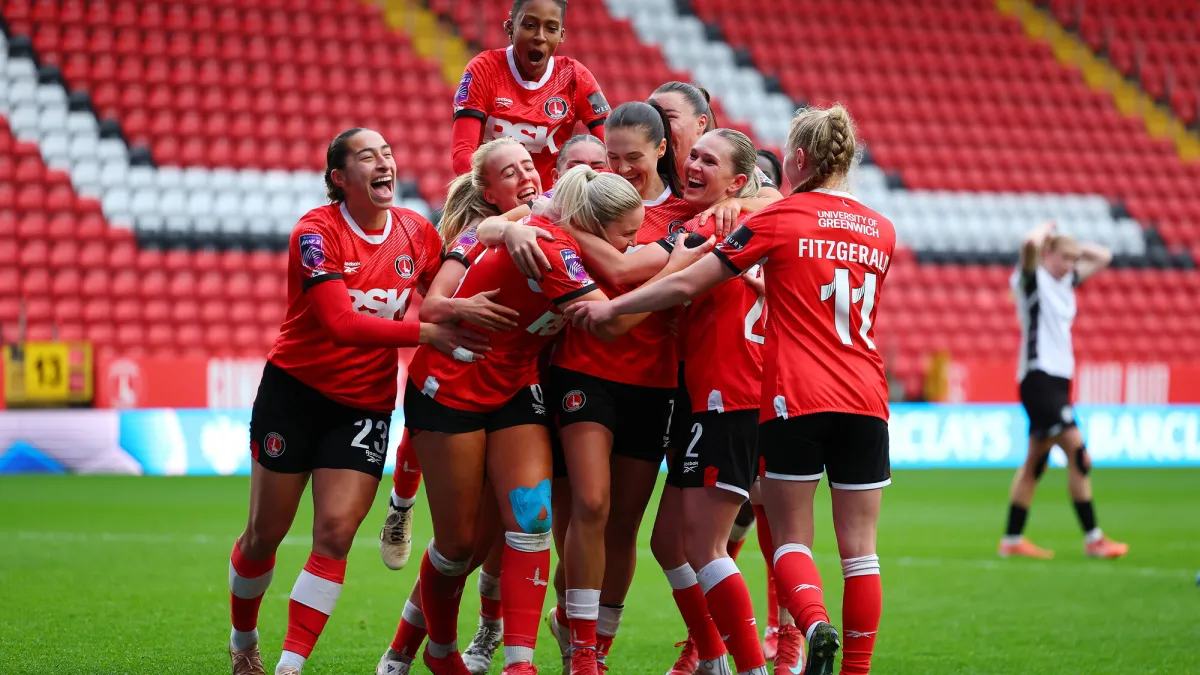 Photo: Charlton Women, via cdn.charltonafc.com
Talk to the fans who've been coming to The Valley for years, the players who've worn the red shirt, and the staff who run the day-to-day operation, and a consistent picture emerges: this is a club where being yourself isn't just tolerated — it's genuinely welcomed.
 Photo: The Valley, via variety.com
How that happened, and who made it happen, is a story worth telling properly.
It Started with the Small Things
No single moment transformed Charlton Women into the inclusive environment it is today. It was, by most accounts, a gradual accumulation of smaller things — the way a senior player spoke openly about her relationship, the way nobody flinched. The way a rainbow flag appeared in the away end without anyone making a fuss about it. The way certain conversations stopped being whispered and started being had out loud.
"It's easy to look back and identify the big gestures," says one long-time supporter who has followed the women's team for the better part of a decade. "But honestly, the thing that made me feel comfortable was just... the vibe. You'd be standing on the terrace and nobody cared who you were or who you were with. You were just an Addick."
That sense of belonging — uncomplicated, unqualified — is something LGBTQ+ fans describe with a particular kind of relief. For many, it represents a contrast to experiences at other clubs or in other sporting environments where their presence felt merely permitted rather than genuinely embraced.
When Players Lead the Way
One of the most powerful forces for cultural change at any football club is what happens when players are willing to be visible. In women's football, where LGBTQ+ representation has historically been more open than in the men's game, Charlton Women have benefited from players who never felt the need to compartmentalise their identities.
Several current and former players have spoken, in various forums, about how the club's environment made it straightforward to be open. Not in a way that required courage or a dramatic coming-out moment — simply in the sense that it was never an issue.
"I've been at clubs where you just knew there were things you didn't say," recalls one former midfielder who spent three seasons with the first team. "At Charlton it was completely different. My girlfriend used to come to training sometimes and nobody batted an eyelid. That sounds like a small thing but it meant everything."
When players feel free to be themselves, that freedom radiates outward. Teammates become more comfortable. The dressing room culture shifts. And eventually, that culture becomes visible to supporters, who take their cues from the environment the players themselves have helped create.
From Buzzword to Lived Reality
Clubs across football love to talk about inclusion. Pride month arrives, a rainbow badge appears on the club crest, and then September comes and everything goes back to normal. It's a pattern that LGBTQ+ fans have become wearily familiar with — performative support that evaporates the moment it stops being convenient.
What makes Charlton Women's approach different, according to the people involved, is that the commitment extends well beyond June.
The club has worked with supporter groups to ensure that matchday environments are actively welcoming rather than passively neutral. Stewards have received diversity training. Club communications consistently reflect the full breadth of the fanbase. And crucially, the people making decisions about culture are themselves invested in getting it right — not because it looks good in a press release, but because they understand what it means to the people in the stands and on the pitch.
"There's a difference between a club that celebrates Pride and a club that's actually proud," says one staff member involved in supporter engagement. "We want to be the second one. That means doing the unglamorous work — the conversations, the training, the listening — not just the visible stuff."
The Fans Who Found Their Home
For LGBTQ+ supporters, finding a football club that genuinely feels like a safe space is not a given. It can take years of tentative attendance, of scanning crowds for signals, of working out whether the atmosphere is one that will accept you fully or merely put up with you.
At Charlton Women, a number of supporters describe a process of discovery that moved unusually quickly from cautious to completely comfortable.
"I came to my first game with a friend — we were both a bit nervous, if I'm honest, because you just never know," says one fan who now attends almost every home match. "By half-time I'd been chatting to three or four different people and it was just... normal. Nobody was trying to make a point of being inclusive. They were just being normal people who were there for the football."
That normalcy — the absence of performative welcome — is repeatedly cited as the thing that makes Charlton Women's matchday experience distinctive. Genuine inclusion doesn't announce itself. It simply is.
Looking Forward
The work isn't finished. No club's is. There are still conversations to be had, barriers to dismantle, and moments where the gap between aspiration and reality becomes visible. Charlton Women's staff and supporters are, by and large, honest about that.
But the foundation is solid. The culture that has developed at The Valley — through the accumulated choices of players, coaches, fans, and administrators over many years — is one that prioritises people over optics. That's rarer than it should be in football, and it's worth recognising.
For the LGBTQ+ fans, players, and staff who've found their home in red, the message has been consistent and clear: you belong here. Not as a diversity statistic, not as a gesture towards modern values, but as an Addick — full stop.
And in football, that's everything.