Silence Is Just Noise You Haven't Learned to Use Yet
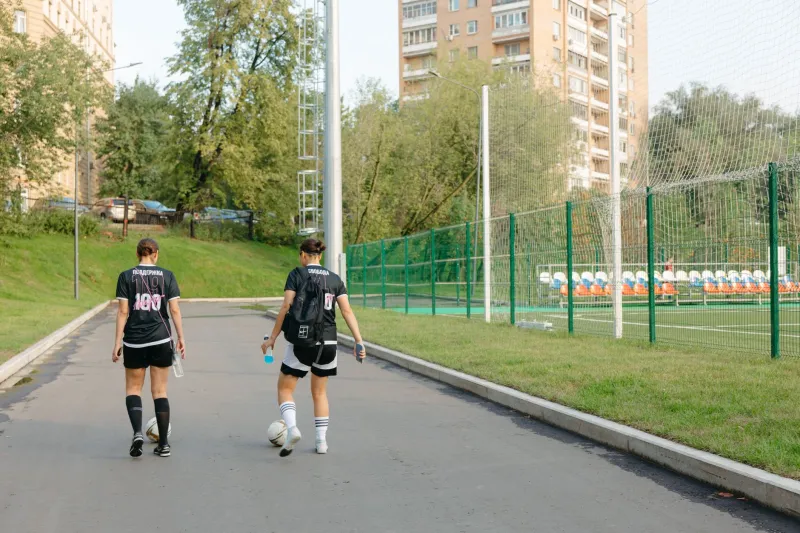
There's a particular kind of quiet that settles over a stadium when the crowd is thin. Not peaceful. Not calm. Just... absent. The sort of silence that amplifies every misplaced pass, every frustrated shout from the dugout, every squeak of a boot on damp grass. For players at the top end of the men's game, that feeling is a rarity. For many women's footballers, it's just another Tuesday.
Charlton Women don't shy away from that reality. In fact, they've made a point of confronting it head-on — and what they've built in response is something that goes well beyond simply coping.
The Echo You Can't Ignore
Anyone who's played sport in front of a small crowd will tell you it's a different beast entirely. The usual buzz that carries you through the hard moments — the roar when you win a tackle, the collective groan that tells you the fans are with you — isn't there to fall back on. What fills that space instead depends entirely on what you bring to the pitch yourself.
"When it's loud, the atmosphere almost plays for you a little bit," one Charlton Women midfielder told us. "You feel the energy and it lifts you. When it's quieter, you have to generate all of that internally. That's actually harder than it sounds."
It's a sentiment echoed throughout the squad. The mental load of sustaining intensity without external stimulus is something few coaching manuals address directly, yet it's a skill that women's footballers develop almost by necessity. At Charlton, it's become something the staff actively work on.
Building the Bubble
The coaching team have spoken before about the importance of creating what they call a "performance environment" that exists independently of matchday variables. Crowd size is just one of those variables — alongside weather, travel disruption, and the general chaos of a season that doesn't always get the media attention it deserves.
The practical tools vary from player to player. Some rely heavily on pre-match music and personalised warm-up routines that anchor them in a specific mental state before they even step out of the tunnel. Others focus on internal dialogue — not the motivational poster variety, but specific, technical self-talk that keeps the brain busy with the right problems.
"I have a few phrases I say to myself before big moments," said one of the club's defenders. "Nothing dramatic. Just reminders about positioning, about what my job is. It stops your mind wandering to the fact that it's a bit quiet out there."
There's also a strong collective dimension to it. Charlton Women have developed a reputation for vocal, energetic communication on the pitch — calling for the ball, organising defensively, celebrating small wins loudly. Part of that is tactical. But part of it is deliberate atmosphere-creation. When the stands don't provide the noise, the players provide it themselves.
What the Research Actually Says
Sports psychologists have long noted that crowd noise functions as a form of external arousal regulation — essentially, it does some of the emotional work for you. Remove it, and athletes either flatline or learn to self-regulate at a higher level. The latter is considerably more useful in the long run.
There's a compelling argument that women's footballers, precisely because they've had to develop this capacity, are better equipped to perform in high-pressure, low-atmosphere environments — penalty shootouts, behind-closed-doors cup ties, neutral venue finals where neither set of fans dominates. It's a competitive advantage hiding in plain sight.
At Charlton, this hasn't gone unnoticed. The club's player development philosophy increasingly incorporates mental performance work alongside the physical and tactical. It's not about pretending the challenges don't exist. It's about training the response to them.
The Fans Who Do Show Up
None of this is to diminish the supporters who do make the journey. The Charlton Women faithful — the regulars who know the squad by name, who bring the flags, who make themselves heard regardless of the attendance figure — are genuinely valued by the players in a way that's hard to overstate.
"When you've got a couple of hundred people who are really there, really invested, it actually hits differently than being in a half-full stadium where half the people are just passing through," one forward told us. "Our fans know the game. They react to the right things. That means something."
There's a closeness between Charlton Women and their supporter base that larger crowds can sometimes dilute. Players recognise faces. Supporters know players' stories. The relationship is direct in a way that feels increasingly rare in modern football.
Resilience as Identity
What strikes you, talking to the squad about all of this, is that none of it is framed as a hardship. There's no resentment, no sense of grievance about the disparity between the atmosphere at a men's Premier League game and a Women's Championship fixture on a Sunday afternoon.
Instead, there's something closer to pride. Pride in having built a mental toughness that doesn't rely on external validation. Pride in an identity that comes from within the group rather than being borrowed from the crowd.
"We know who we are," said one senior player, simply. "We don't need a packed stadium to remind us."
In women's football, that kind of self-possession is earned. At Charlton, they've been earning it quietly for years. The noise, it turns out, was always there. They just learned to make it themselves.