After the Final Whistle: Former Charlton Women Players on Life Beyond the Game
There's a strange kind of grief that nobody really prepares you for when a football career ends. It's not just the loss of the game itself — the training, the matchdays, the dressing room. It's the loss of the structure, the identity, the answer to the question "so what do you do?"
For players who've represented Charlton Women, that transition carries its own particular weight. The club has been part of the women's game long enough that its alumni span generations — from players who turned out in an era when women's football barely registered in the mainstream press, to those who finished their careers as the sport was finally getting the recognition it deserved. What they share is the experience of figuring out what comes next.
We spoke to several former Addicks about the paths they've taken since retirement — some expected, some surprising, all of them shaped by what football gave them.
Into the Technical Area
The most obvious second chapter for a retired footballer is coaching, and Charlton Women's alumni list includes a number of people who've made that transition at various levels of the game.
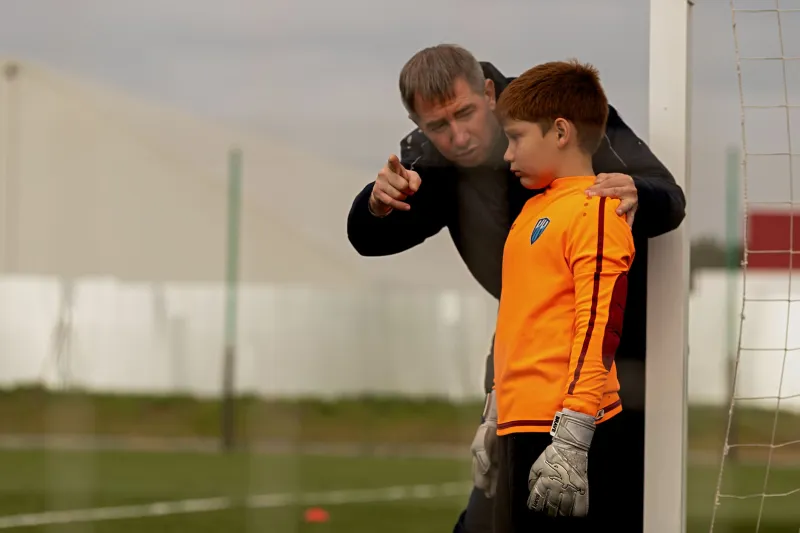
For some, it was a natural continuation — a way to stay close to something they loved while passing on what they'd learned. "I couldn't imagine just stopping," says one former defender who now coaches at an academy in South East London. "The game had given me so much, and I felt like I still had things to contribute. Coaching felt like the right way to do that."
What she didn't anticipate was how much she'd learn from the players she was coaching. "You think you're going to be the one with all the answers, and then a fifteen-year-old asks you something that makes you completely rethink how you approach a drill. It keeps you sharp."
Others have moved into coaching at the grassroots level, specifically working with girls and young women who are at the beginning of their journeys. The motivation is often explicitly about giving back to the kind of community that helped develop them — and, in some cases, addressing the gaps in provision that existed when they were coming through themselves.
"When I was young, there wasn't much for girls in this area," reflects one former winger who now runs sessions for under-12s at a community club in Lewisham. "I want the girls I work with to have more opportunities than I did. That feels like a proper use of what I've learned."
On the Mic
A growing number of former players are finding their voices in media and punditry — a shift that mirrors the broader professionalisation of women's football coverage across the UK.
One ex-Charlton Women midfielder spent several years after retirement building a presence as a commentator and analyst, initially through local radio and community media before moving into more prominent roles. She's candid about how she found the transition.
"I was terrified at first. Playing is one thing — you're in control of your own actions. Broadcasting is completely different. You're being judged on your words, your opinions, your ability to articulate things in real time. It took a long time to feel comfortable."
What helped, she says, was the confidence she'd developed through years of dressing room communication — learning to read people, to say difficult things clearly, to hold her ground under pressure. "Football teaches you how to deal with scrutiny. Every decision you make on the pitch gets analysed. That's actually pretty good preparation for being on a panel show."
Entirely Different Pitches
Not every former Charlton Women player has stayed within football's orbit, and some of the most interesting second acts involve industries that seem, on the surface, entirely disconnected from sport.
One former striker is now a qualified physiotherapist, a path she began planning during the latter stages of her playing career after several injury-affected seasons gave her an up-close education in rehabilitation. "I spent so much time with physios," she explains. "I became genuinely fascinated by what they did. By the time I retired, I already had a clear direction."
Another has moved into education, teaching PE at a secondary school in Bromley. She's open about the fact that football gave her a framework for teaching that she couldn't have developed any other way. "Managing a class is not that different from managing a team dynamic. You've got different personalities, different motivations, different levels of ability. You learn to read a room. Football taught me that."
There are also former players who've moved into business, community work, sports administration, and personal training — each of them drawing on a set of transferable qualities that football quietly instilled: discipline, time management, the ability to perform under pressure, and an understanding of how to function within a team.
Staying Connected to the Addicks
What's striking across all the conversations is how many former players maintain a genuine connection to Charlton Women — not out of obligation, but because the club remains part of how they see themselves.
Some come back as mentors, working informally with current academy players or lending their experience to development programmes. Others are regulars in the stands, faces that the current squad might not always recognise but who carry the club's history in their match-day memories.
"I still feel like an Addick," says one former player who retired several years ago and now works in sports management. "I'll always feel like an Addick. That doesn't go away just because you stop playing. If anything, the perspective you get from being away from it makes you appreciate what the club means even more."
The relationship between a footballer and the club they played for is rarely simple, but at Charlton Women, the thread seems to hold. Players move on, careers end, lives change — but the connection to the red shirt, to The Valley, to the community that shaped them, tends to stay.
The Lesson They All Carry
If there's a single thing that unites the stories of former Charlton Women players building lives beyond football, it's this: the game doesn't just prepare you to play. It prepares you to handle almost anything.
"Football is relentless," reflects one former captain, now working in sports psychology. "You get knocked back constantly — by injuries, by selection decisions, by results. You either learn to deal with that and come back stronger, or you don't last. The ones who do last carry that resilience into everything they do next."
The final whistle, it turns out, is never really the end. It's just the start of a different kind of match.