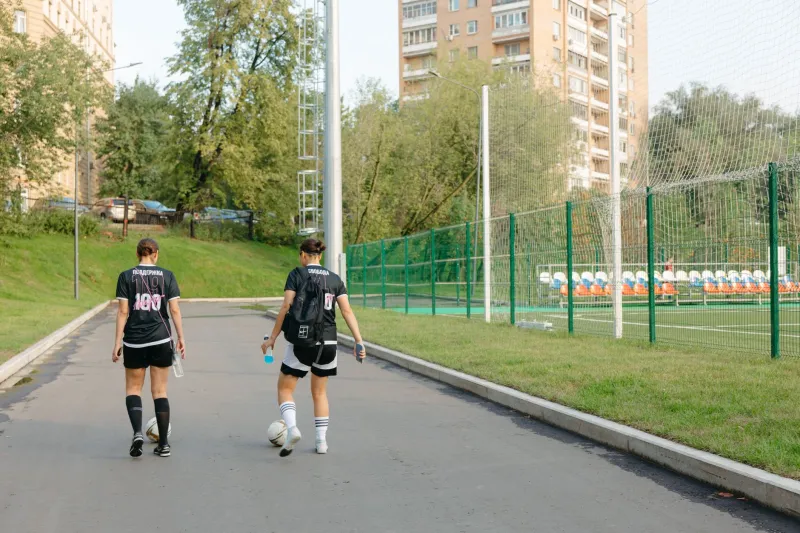
Red Shirts, Home Streets: The South London Players Who Always Belonged at Charlton Women
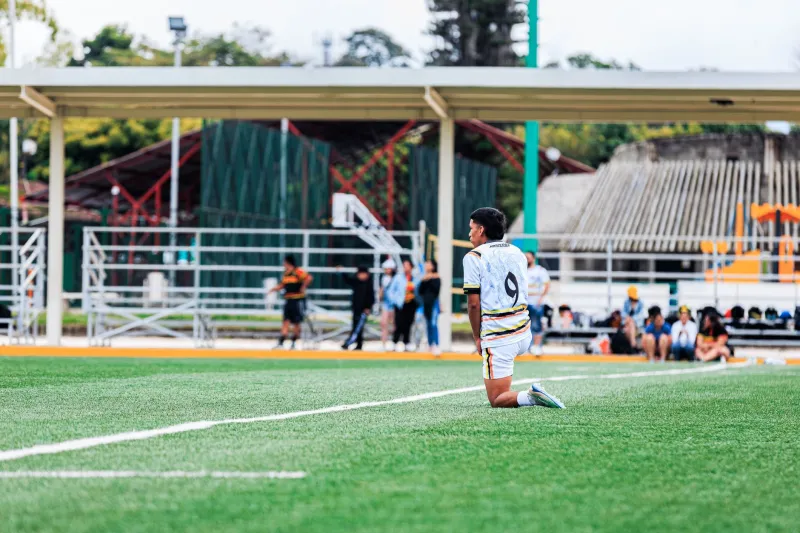
There's a particular kind of pressure that comes with playing for the club you grew up supporting. It's different from any other kind. The crowd isn't just a crowd — it's your nan, your old PE teacher, the girl from your secondary school who texted you when the team sheet dropped. Every touch carries a little more weight. Every mistake stings a little differently.
And yet, ask the South London players who've made that journey from supporter to squad member, and almost all of them will tell you the same thing: they wouldn't have it any other way.
Watching Before Playing
For a certain generation of South London girls, Charlton Women were a fixture in the background of growing up. Not always the loudest presence — women's football didn't always get the platform it deserved — but consistent. Present. A team that existed and competed and, for the right kind of dreamer, proved that this was something you could actually do.
"I remember being dragged along by my dad when I was about seven," says one player who grew up in Lewisham and now plays for the first team. "I don't think he expected me to fall in love with it. I absolutely did."
She spent years playing for local grassroots clubs in the borough before Charlton's academy came calling. The moment she signed, she says, felt surreal in a way that was hard to articulate — like something that had been pointing in one direction for a very long time had finally arrived at its destination.
"It didn't feel like a new chapter. It felt like the chapter I was always supposed to be in."
The Weight of the Postcode
Playing for a club that is genuinely embedded in your community brings a kind of accountability that is hard to manufacture. It's not about pressure in the negative sense — it's about meaning. When you represent a place, not just a shirt, the motivation runs deeper.
For players from SE postcodes, from Greenwich to Eltham to Peckham, Charlton Athletic is woven into the fabric of local identity. The Valley sits at the heart of a community that has its own personality, its own history, its own very particular sense of belonging. To play there — as someone who is from there — is to carry all of that with you.
"My mates from school come to games," says one midfielder from Woolwich. "They're not football obsessives. They come because it's me, because it's local, because they feel like they have a stake in it. That changes how it feels to play. In a good way."
There's also something powerful about visibility. When young girls from South London see players who look like them, who went to schools like theirs, who took the same buses and grew up on the same streets — it reframes what's possible in a way that no poster campaign ever quite manages.
The Academy Connection
Many of the local players in and around the Charlton Women first team came through a journey that started at the academy — sometimes the club's own, sometimes a neighbouring pathway that eventually funnelled toward SE7. That route is increasingly intentional.
Charlton Women have made a sustained effort to identify and develop talent from within the communities closest to the club. It's a philosophy rooted in the belief that South London produces exceptional footballers — always has — and that a club with Charlton's roots should be first in line to nurture them.
"We know this area," one academy staff member explains. "We know the schools, the parks, the Sunday league clubs. We have relationships. And the talent is absolutely there — it always has been. The job is making sure it finds its way to us."
For the players who make that journey, arriving at the first team feels less like breaking into something and more like completing a circuit.
Playing at Home, Literally
There's a specific joy in playing a home fixture at The Valley when your family is in the stand. When the street you grew up on is a fifteen-minute bus ride away. When you can hear familiar voices in the crowd during a quiet moment in the game.
It's grounding in the best possible sense. A reminder, when football can sometimes feel like an industry that pulls you away from who you actually are, of exactly who you are and where you come from.
"My mum comes to every home game," says one player from Greenwich. "She sits in the same spot every time. I know where she is without looking. And I know that when I play well, she's going absolutely mad up there. That makes me smile even in the middle of a match."
The connection between player and place also extends outward into the community in ways that matter. Local players do school visits in their own boroughs. They're recognised at the supermarket. They get stopped by kids who want photos. They are, in the most genuine sense, role models — not by appointment, but by proximity.
Inspiring the Next Wave
If you walk around the parks and pitches of South London on a Sunday morning, you'll find girls playing football in numbers that would have seemed remarkable twenty years ago. Some of them are wearing Charlton kits. Some of them are wearing whatever they could find. All of them are playing.
And some of them, inevitably, are watching the women's team and doing the maths. Noticing that the player on the left wing went to a school three stops away. Noticing that the captain grew up in the same borough. Doing the quiet, powerful calculation that says: if she got there, maybe I can too.
That's the thing about local players in local shirts. The inspiration isn't abstract. It's right there, on the pitch, in the red, under the lights at The Valley.
It's home.