Same Club, Different Rules: The Prize Money Gap Nobody Wants to Talk About
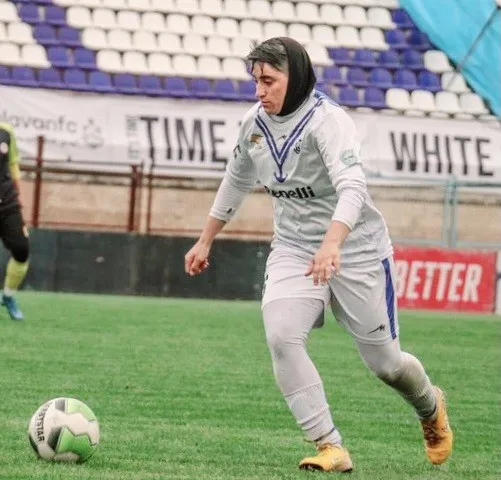
Photo: sidafdooa, CC0, via Wikimedia Commons
There's a moment, somewhere between the final whistle and the walk back to the dressing room, when the reality of women's football economics tends to land hardest. You've just given ninety minutes of your body, your preparation, your week — and somewhere across South East London, the numbers attached to that effort look nothing like the ones your male counterparts will see at the end of the month.
This isn't a complaint. It's a conversation Charlton Women players are increasingly willing to have, and one the wider game can no longer afford to sidestep.
The Numbers Behind the Badge
Women's football in England has made extraordinary strides. The Lionesses' Euro 2022 triumph shifted the cultural dial in ways that felt genuinely permanent. Attendances are up, broadcast deals are improving, and the WSL is attracting serious investment. But beneath the headline growth, a stubborn financial architecture remains largely intact — and it shapes everything from recruitment to retirement planning.
At Championship and lower pyramid level, where Charlton Women currently operate, the gap between men's and women's earnings isn't just significant. For many players, it's the defining feature of their professional lives.
"You don't go into women's football expecting to get rich," says one Charlton Women midfielder, speaking candidly. "But when you sit down and actually look at what the men's academy lads are on compared to what we're earning as established first-team players, it's a number that's hard to make sense of. We're wearing the same badge."
Prize money structures across the women's football pyramid remain considerably lower than their men's equivalents at comparable tiers. A promotion bonus that might represent life-changing money in the men's game translates to something considerably more modest for women's players — if a formal bonus structure exists at all.
What Recruitment Actually Looks Like
The financial disparity doesn't just affect players already inside the building. It shapes who Charlton Women can attract in the first place.
For a club with genuine ambitions, the recruitment conversation frequently runs up against a hard ceiling. A player weighing up options from two or three clubs will, rationally, factor in financial security alongside footballing opportunity. When rival clubs can offer marginally better terms — even in a landscape where "better" is relative — Charlton Women's staff have to work harder to sell the project on its other merits.
"The pitch we make is about the environment, the development pathway, the coaching, the culture," explains a source close to the club's recruitment operation. "And those things are genuinely strong here. But we'd be naive to pretend finances don't come into it. Some players we've been keen on have gone elsewhere for reasons that were ultimately about money. That's just honest."
Retention carries its own pressures. A player who develops significantly at Charlton Women — who improves under the coaching staff, who contributes to results — becomes attractive to clubs operating at higher financial levels. Without the commercial infrastructure to match those offers, keeping hold of talent is a constant challenge.
The Bonus Conversation
Bonus structures in women's football vary wildly from club to club, and transparency around them is limited. What's clear from speaking to players across the squad is that performance-related pay — the kind that rewards a cup run, a promotion push, or a title — rarely reflects the investment of effort those achievements require.
"In the men's game, a good cup run means something financially," notes one Charlton Women forward. "For us, the feeling of a cup run is brilliant — don't get me wrong — but the material reward doesn't really match what you put in to get there. You're training full-time or near enough, you're giving everything, and then the bonus at the end of it is... modest."
The structural reasons for this are well-documented. Women's football generates less broadcast revenue. Commercial partnerships, while growing, haven't yet reached parity. Prize money pools distributed by the FA and league bodies reflect historical funding models that are only slowly being renegotiated.
But understanding the reasons doesn't make navigating them any easier, particularly for players trying to make long-term financial plans.
What Parity Would Actually Cost
Here's where the conversation gets genuinely complicated. Ask what true financial parity between Charlton's men's and women's programmes would require, and the honest answer involves numbers that the current commercial model of women's football doesn't yet generate.
Parity isn't simply a matter of will. It requires revenue — from gates, from broadcast, from commercial partners — that women's football is building towards but hasn't yet fully reached at Championship level and below. A club that tried to implement full pay parity unilaterally, without the revenue base to support it, would face serious financial sustainability questions.
What Charlton Women and clubs like them can do is ensure that the gap isn't wider than it needs to be. That bonus structures are transparent and fair within the available envelope. That commercial opportunities — shirt sales, appearances, sponsorship — are actively created and shared equitably with players. That the journey towards parity is treated as a genuine organisational priority rather than a distant aspiration.
"I don't think anyone here expects overnight change," says one senior player. "What matters is that there's a direction of travel, and that people in charge of the club actually care about it. That the conversation is happening."
The Valley Has Two Teams
Charlton Athletic's history is built on a certain kind of community solidarity — the years away from The Valley, the fans who kept the faith, the return that became legend. That identity doesn't sit comfortably alongside a financial model that treats two sets of players wearing the same crest in fundamentally different ways.
The women's team isn't asking for charity. They're asking for the kind of institutional commitment that matches the effort they bring every single week. Longer contracts. Meaningful bonus structures. Commercial investment that treats them as an asset rather than an afterthought.
The prize money gap in women's football is real, persistent, and consequential. At Charlton Women, players are navigating it with grace and determination. But grace and determination shouldn't have to be a substitute for fair reward.
The same badge deserves the same conversation.