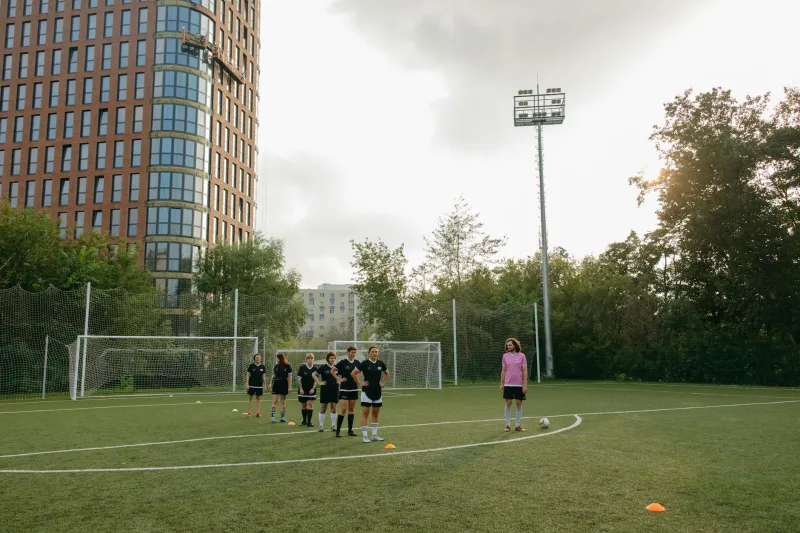
The Weekend Warriors
Every Sunday morning, while most of us are enjoying a lie-in, Sarah Mitchell is already on the M25, heading to yet another football pitch somewhere in the Home Counties. Her battered estate car is loaded with thermos flasks, weatherproof notebooks, and enough petrol receipts to paper her kitchen wall. As one of Charlton Women's senior talent scouts, Sarah's weekends aren't her own – they belong to the future of the Addicks.
"People think scouting is glamorous," Sarah laughs, adjusting her woolly hat against the October chill at a Hertfordshire sports ground. "But it's mostly standing on touchlines in the rain, watching 16-year-olds who might never make it past county level. The trick is spotting the one who will."
Sarah isn't alone in this mission. Charlton Women operate a network of eight dedicated scouts across England, each covering their patch with the methodical precision of a detective. From grassroots tournaments in Yorkshire to college matches in Devon, these talent hunters are the club's eyes and ears in the football wilderness.
More Than Just Watching
The modern scout's toolkit extends far beyond a keen eye for talent. Dave Henderson, who covers the Midlands region for Charlton, carries a tablet loaded with performance analysis software and maintains detailed databases on hundreds of young players.
"It's not like the old days when you'd just turn up and watch," Dave explains between matches at a Birmingham youth tournament. "We're tracking everything – technical ability, physical development, mentality, even how they interact with teammates. A brilliant player who can't handle pressure or doesn't gel with others won't make it at Championship level."
The scouts work closely with Charlton's academy coaches, feeding back not just on individual players but on emerging tactical trends and training methods they observe across the country. This intelligence helps shape how the Addicks develop their own young talent.
The Stories Behind the Signings
Every successful scout has their tales of discovery, and Charlton's network is no different. Emma Rodriguez, who joined the scouting team three years ago, still gets emotional recounting how she first spotted current squad member Jessica Clarke playing for her university team in Manchester.
"Jess was playing out of position as a makeshift centre-back because her team was short on players," Emma recalls. "But I could see her natural instincts, the way she read the game. She had that spark you can't teach – football intelligence."
That 'spark' led to Jessica being invited for trials at The Valley, where she impressed coaches enough to earn a development contract. Eighteen months later, she was making her first-team debut in the FA Cup.
Not every story ends in glory, though. For every Jessica Clarke, there are dozens of talented players who don't quite make the grade. The scouts know this reality all too well, but it doesn't dampen their enthusiasm for the hunt.
Building Relationships, Not Just Reports
What sets Charlton's scouting network apart is their approach to relationship building. Rather than swooping in to cherry-pick talent, the scouts invest time in local football communities, building trust with coaches, parents, and the players themselves.
"We're not just talent vampires," insists Tom Walsh, who covers the South West. "We want to support grassroots football, not exploit it. If we spot a promising player who isn't quite ready for us, we'll recommend other development pathways or connect them with better coaching in their area."
This community-focused approach has paid dividends. Local coaches now actively contact Charlton's scouts about promising players, creating a valuable network of informal partnerships across the country.
The Future of Finding Talent
As women's football continues its rapid growth, the competition for young talent is intensifying. WSL clubs with bigger budgets are casting wider nets, while the FA's regional talent centres are becoming more sophisticated. Charlton's scouts know they need to be smarter, not just harder working.
"Data analytics are becoming huge," admits Sarah Mitchell. "But there's still no substitute for watching a player in the flesh, seeing how they handle adversity, how they communicate under pressure. That human element – that's what separates good scouts from databases."
The club is also exploring partnerships with women's football academies overseas, recognising that talent doesn't stop at Dover. Plans are underway to establish informal scouting relationships in Ireland, France, and Scandinavia.
The Unsung Heroes
As Charlton Women continue their push towards the WSL, the importance of their scouting network cannot be overstated. These dedicated individuals, often volunteers or part-time staff, form the foundation upon which the club's future will be built.
Their reward isn't financial – it's seeing a nervous teenager they spotted playing Sunday league football eventually pulling on the famous red shirt at The Valley. It's watching young women fulfil dreams they never knew they had, all because someone with a trained eye and an unwavering belief in potential decided to make a phone call.
Next time you're at The Valley watching Charlton Women, spare a thought for the scouts who helped assemble that team. They might not get the headlines, but without their tireless work on touchlines across the country, the beautiful game we all love would be a much poorer spectacle.