Tape, Tech, and Trust: The Unseen Science Keeping Charlton Women on the Pitch
There's a moment, usually around 7am on a matchday, when the performance lab at Charlton Women hums to life before most of the squad has even arrived. Monitors flicker on. Resistance bands get sorted into colour-coded piles. A whiteboard gets updated with the day's load targets. And somewhere in the middle of it all, the medical and sports science staff are already three steps ahead of the game.
This is the work that doesn't make the highlight reel. Nobody clips the GPS data review or the soft tissue assessment for social media. But talk to anyone inside the club and they'll tell you the same thing: this is where seasons are won or lost.
From Guesswork to GPS
It wasn't so long ago that women's football operated on a shoestring when it came to medical support. Ice packs, a first-aid kit, and a well-meaning volunteer with a sports massage qualification was, for many clubs, the entire setup. The contrast with what Charlton Women have built is stark.
The squad now benefits from GPS tracking vests worn in training, which measure sprint distances, acceleration loads, and what's called 'high-intensity metres' — basically, how hard each player is working at the sharp end of their physical capacity. That data gets fed back to the performance staff, who cross-reference it with training schedules and competition calendars to make sure nobody is being pushed toward the red zone without good reason.
"We're not just looking at how fast someone ran," explains one member of the performance team. "We're looking at trends. If a player's sprint output drops by fifteen percent across three sessions and she hasn't flagged anything, that's a conversation we need to have. Sometimes she's carrying something. Sometimes she's mentally fatigued. The numbers open the door — they don't give you the full answer."
That last point matters. Because as sophisticated as the tech has become, the staff are quick to stress that data is a starting point, not a verdict.
The Human Side of Recovery
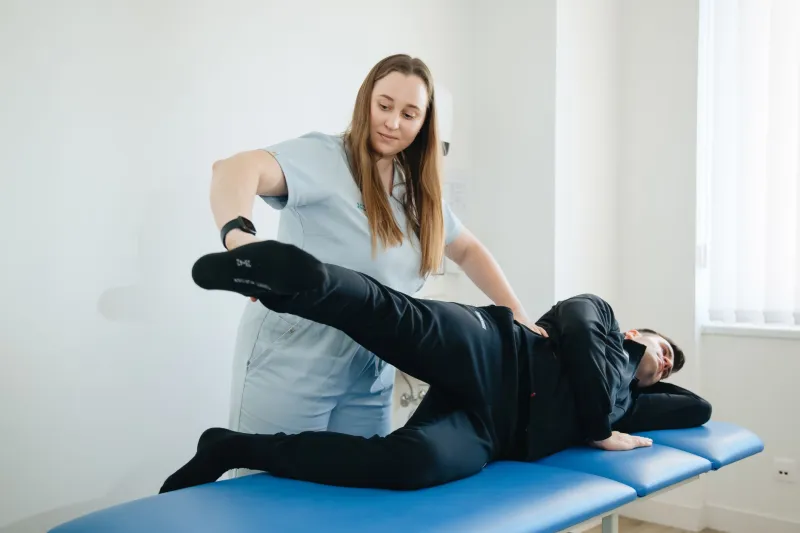
Walk into the treatment room between sessions and you'll find something that looks less like a laboratory and more like a busy GP surgery. Players come in for soft tissue work, for strapping, for conversations. There's a kettle. There's usually a bit of banter. And there's a level of trust between players and medical staff that takes time to build and is genuinely irreplaceable.
"The relationship is everything," says one of the physios. "A player has to feel comfortable telling you something hurts even when she doesn't want to come off. That's not a given. You earn that."
Injury prevention, they explain, is far more complex than simply doing the right warm-up. It involves load management across the week, monitoring sleep quality where players are willing to share it, understanding the menstrual cycle's impact on injury risk — something that's finally getting the attention it deserves in women's sport — and catching the small things before they become the big things.
Hamstring issues, ACL concerns, hip flexor tightness after a heavy block of fixtures. These aren't random misfortunes. They follow patterns. And recognising those patterns early is, in the words of one staff member, "the whole job, really."
Recovery Isn't Just an Ice Bath
The recovery protocols at Charlton Women have moved well beyond the traditional dunk in a cold tub — though cold water immersion still has its place. Players have access to compression therapy, targeted mobility work, and nutrition guidance that's tailored to the demands of the fixture schedule rather than a one-size-fits-all plan.
On double-session days or after particularly intense matches, the focus shifts to what the staff call 'restoration' — getting the body back to baseline as efficiently as possible. That might mean a pool session, a guided recovery yoga flow, or simply making sure a player eats the right combination of protein and carbohydrates within a specific window after training.
"Marginal gains isn't just a buzzword," one of the strength and conditioning coaches says with a grin. "It's genuinely what we're chasing. If we can get a player to recover two percent better, that compounds over a season. That's the difference between her being available for forty games or thirty-five."
When Things Go Wrong
For all the prevention work, injuries happen. Football is a contact sport played at pace on grass that isn't always forgiving. And when a player goes down with something serious, the medical team's role shifts completely.
The rehab pathway at Charlton Women is structured but flexible. There are benchmarks — strength ratios to hit, movement quality assessments to pass — but the timeline is never arbitrary. A player isn't rushed back to satisfy a fixture list. The target is always a full return, not a patched-together one.
"We've seen what happens when clubs cut corners on rehab," one physio says quietly. "You get a player back for two games and then she's out for six months. That's not a win. That's a failure dressed up as urgency."
For the players, that patience can be the hardest thing to accept. Sitting out while your teammates train is genuinely difficult. The staff acknowledge that openly, and there's a clear effort to keep injured players involved — present at sessions, part of the group, connected to the rhythm of the team even when they can't participate fully.
The Bigger Picture
What's happening at Charlton Women's performance lab isn't unique in elite sport, but it is increasingly rare at this level of the women's game. The investment in staff, in technology, and in the time required to do this work properly is a statement of intent from the club.
And for the players, many of whom have experienced the bare-bones alternative at previous clubs, the difference is felt immediately.
"I came here and the first thing they did was sit me down and go through my injury history in detail," one squad member recalls. "Not just the big stuff — everything. That told me everything I needed to know about how this place operates."
Science and instinct. Data and trust. Tape and technology. It's all of it, working together, that keeps Charlton Women on the pitch and in the fight.